

- Insiders Profile -
Founder of Bengie Studio
Creative director and founder of Bengie Studio, Sandra Mendes is known for designing visual worlds where aesthetics, storytelling, and atmosphere come together. Her Lisbon-based studio works across creative direction and experiential design, crafting environments where every detail contributes to a larger narrative.
For the Opening Dinner of Lisbon Insiders Restaurant Week, Sandra collaborated on the art direction and immersive layer of the evening, helping translate the vision of the event into a visual and sensory experience. From table styling to the overall atmosphere, her role was to elevate the dinner beyond a traditional restaurant experience.
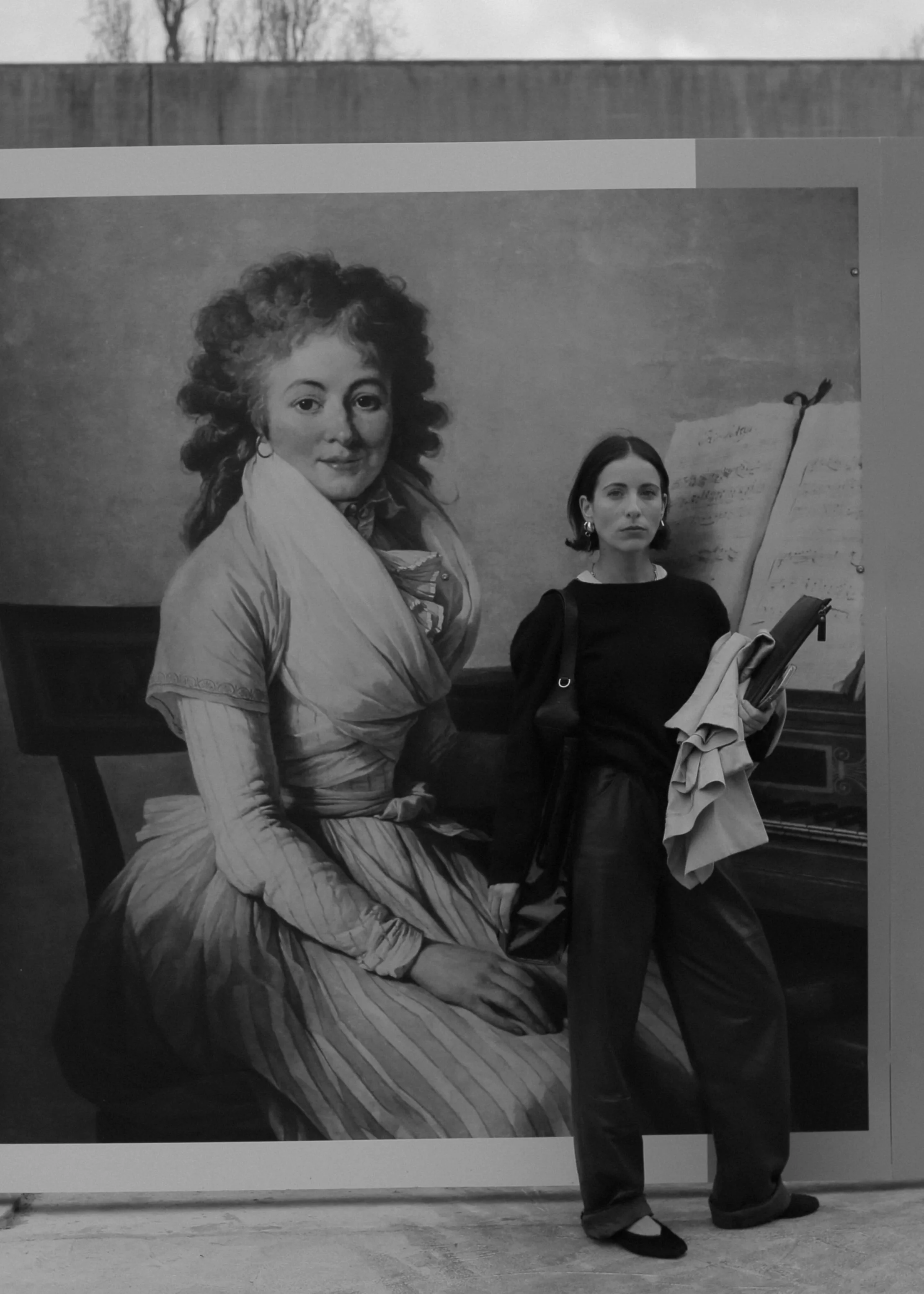
◆ To begin, could you introduce yourself and tell us how Bengie Studio was born?
I don’t design events. I design systems for human encounters. I’m Sandra Mendes, founder and creative director of Bengie Studio, a studio based in Lisbon and working worldwide. Bengie didn’t begin as a business plan. It began as a way of observing people.
I’ve always been fascinated by human behaviour, how we gather, how we react to one another, how certain environments quietly influence the way we relate. The tone of a conversation, the distance between bodies around a table, the rhythm of a room, these subtle dynamics shape how people move, pause, connect, or remain silent.
Over time, Bengie became the system through which the practice explores these dynamics. Not a production company, and not simply a studio creating immersive dinners. It is a framework where ideas about human interaction can take spatial form. What we construct are situations where encounters can unfold.
◆ If you had to describe Bengie Studio in just three words, what would they be?
System. Atmosphere. Encounter.
◆ Your work often focuses on creating atmospheres rather than just aesthetics. How would you describe your creative approach?
The practice rarely begins with form. It begins with a question. How do people behave in a space?
How do they gather, speak, and listen?
What changes when the light shifts, when the rhythm of a room slows down, when the distance between bodies changes?
These small dynamics are endlessly fascinating. The practice explores situations where these behaviours can unfold differently. Light, materials, objects and spatial composition are simply tools within that system. Form appears later. It is the natural consequence of coherence.
When everything belongs to the same idea, the space begins to act almost invisibly. People move differently. Conversations shift. Attention sharpens. And suddenly something very simple happens: people become more present in the moment they are sharing.
◆ For the Opening Dinner of the Lisbon Insiders Restaurant Week, you collaborated on the artistic direction of the evening. How did you approach translating the idea of the dinner into a visual experience?
The first step was not to think about this dinner as an isolated moment. It opened the Restaurant Week, but it also marked the beginning of a series of gatherings that will unfold throughout the year. In that sense, this evening becomes the first chapter of a longer narrative. From there, the dinner was approached as a sequence unfolding over time.
Food already activates taste and smell, two senses deeply connected to memory. The surrounding atmosphere allows other layers of perception to emerge: light, texture, sound and spatial rhythm. When these layers come together, the dinner becomes something more than a meal. It becomes a moment people inhabit together.
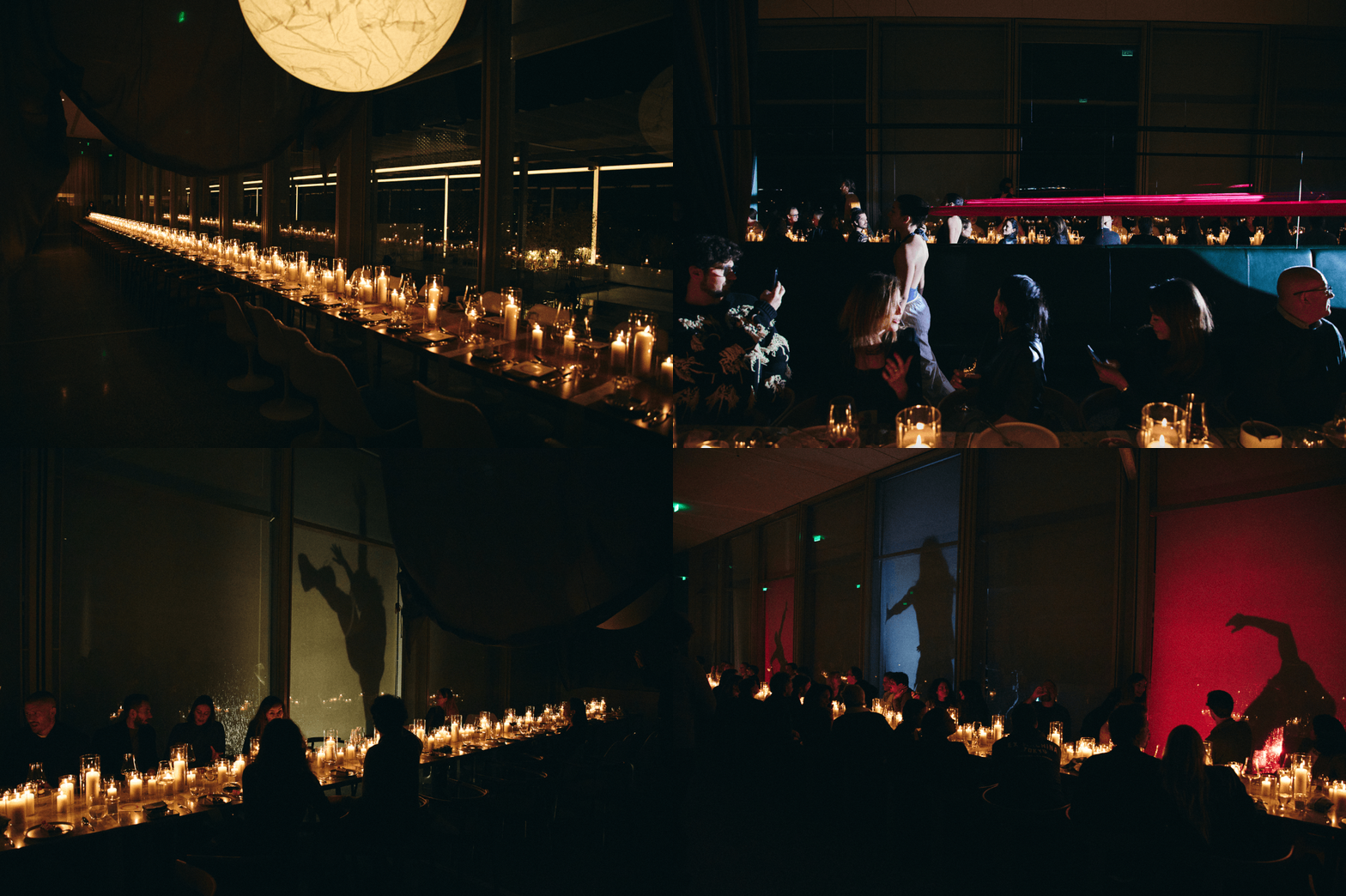
Lisbon Insiders Restaurant Week Opening Dinner
Photo credits: Tiago Mulhmann
◆ What excites you most about bringing an artistic layer to a culinary experience like this one?
Food carries an extraordinary relationship with memory. A taste or a smell can immediately take us somewhere else, another time, another place, another moment in our lives.
When spatial thinking enters that context, the moment expands. The palate activates memory, while the surrounding atmosphere activates the other senses. What interests the practice is coherence, when every element contributes to a shared feeling.
◆ This dinner was meant to feel more like an experience than a traditional restaurant service. From a creative perspective, how do you build that sense of immersion?
A lot of it begins with the table. A table is one of the most powerful human spaces. It is where people gather, where conversations begin, where relationships evolve. I often think of the table as a framework where something can unfold.
The scenography establishes the conditions: light, objects, and spatial rhythm. But the real performance belongs to the guests, through their gestures, their conversations, the way they inhabit the space. What interests the practice is not controlling the moment, but constructing the system that allows it to emerge.
◆ Guests often remember the small details: lighting, textures, objects on the table. What role do these elements play in shaping the mood of the evening?
Details are never decoration. They either belong to the idea, or they don’t belong in the space.
◆ The dinner happened last week. For you, what was the most memorable moment?
For me, the most memorable moment is never a single image, but a shift in the atmosphere. There is always a point in the evening when something changes, when people settle into the space, conversations soften, and a different rhythm begins to emerge around the table.
During the second act, that shift became very clear. The Portuguese music started to settle into the room in a way that felt almost physical; you could feel it moving through people, slowing them down, bringing a different kind of attention. There was a moment with the performer - caught between tension and release, where she felt both restrained and in the process of freeing herself. That contrast was very powerful. It created something almost visceral.
I remember feeling a physical reaction to it; it stayed with me. That’s the kind of moment that interests me. When something intangible becomes shared, and the situation begins to exist on its own, shaped by the people inside it.
At the same time, moments like this are never created alone. Without a strong and cohesive team behind it, none of it would be possible. I’m especially grateful to Jonathan Moss, Mário Calisto, Sofia Bento, and Tiago Mulhmann, as well as to all the performers, whose presence and sensitivity were essential in bringing the situation to life.
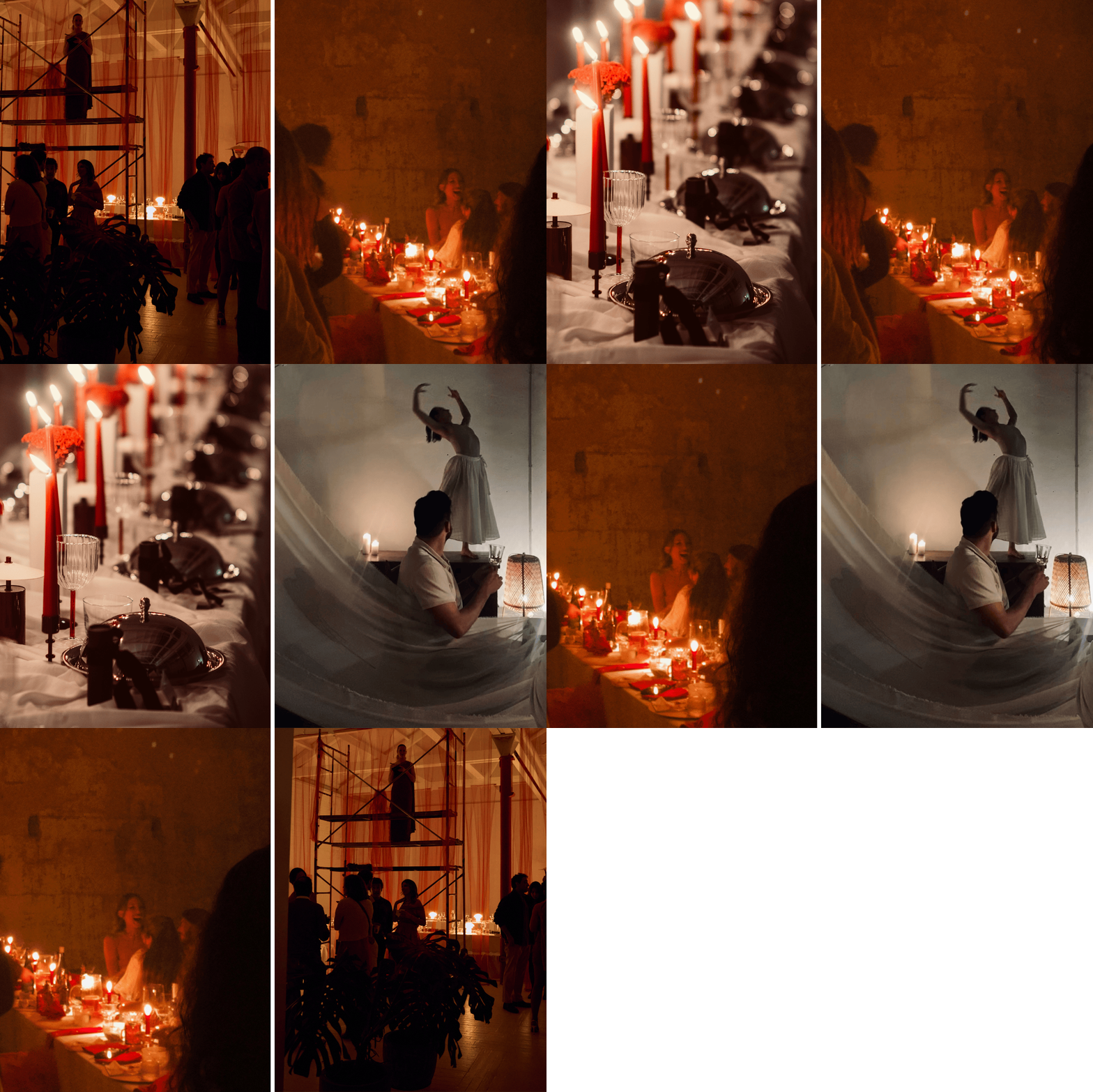
Other projects by Bengie Studio
◆Bengie Studio often works through collaboration. How do you approach working with different partners to bring a shared vision to life?
Bengie works almost like an ecosystem. The practice is not interested in working simply with the “best” people in a technical sense. What matters much more is working with the right people, people who share the same intention. When that alignment exists, collaboration becomes fluid. Everyone brings their knowledge, but the result becomes something collective.
For me, the role of the artist is also to question the world we live in. Spaces and gatherings can carry cultural and political reflections about how we meet and how we share time together.
◆ When you’re not working on a project, where do you like to go in Lisbon to recharge or find inspiration?
Lisbon is where I work and where many collaborations happen, but I’m originally from Porto. I don’t relate to the city through fixed places as much as through movement and encounters. A lot of my inspiration comes from travelling, and from reconnecting with older histories and cultural references that risk being forgotten.
That said, there are places I return to. I often go to the Gulbenkian, both for the exhibitions and for the gardens. There’s a certain quietness there that allows you to slow down and observe things more attentively. I’m also drawn to Japanese food, and I like places like Iru and GoJuu. There is something about the precision and restraint in that cuisine that resonates with the way I think about form and atmosphere.
But more than places, I find inspiration in people. In everyday encounters, speaking with someone from a completely different world, whether it’s a domestic worker, a supermarket lady, an Uber driver, or the owner of a company. Those conversations, those perspectives, the way people see and experience life, are often what stay with me the most.
In the end, it’s less about the place itself and more about what it allows: time to sit, to observe, to listen, and to connect. That’s usually where new ideas begin.
