
- Insiders Profile -
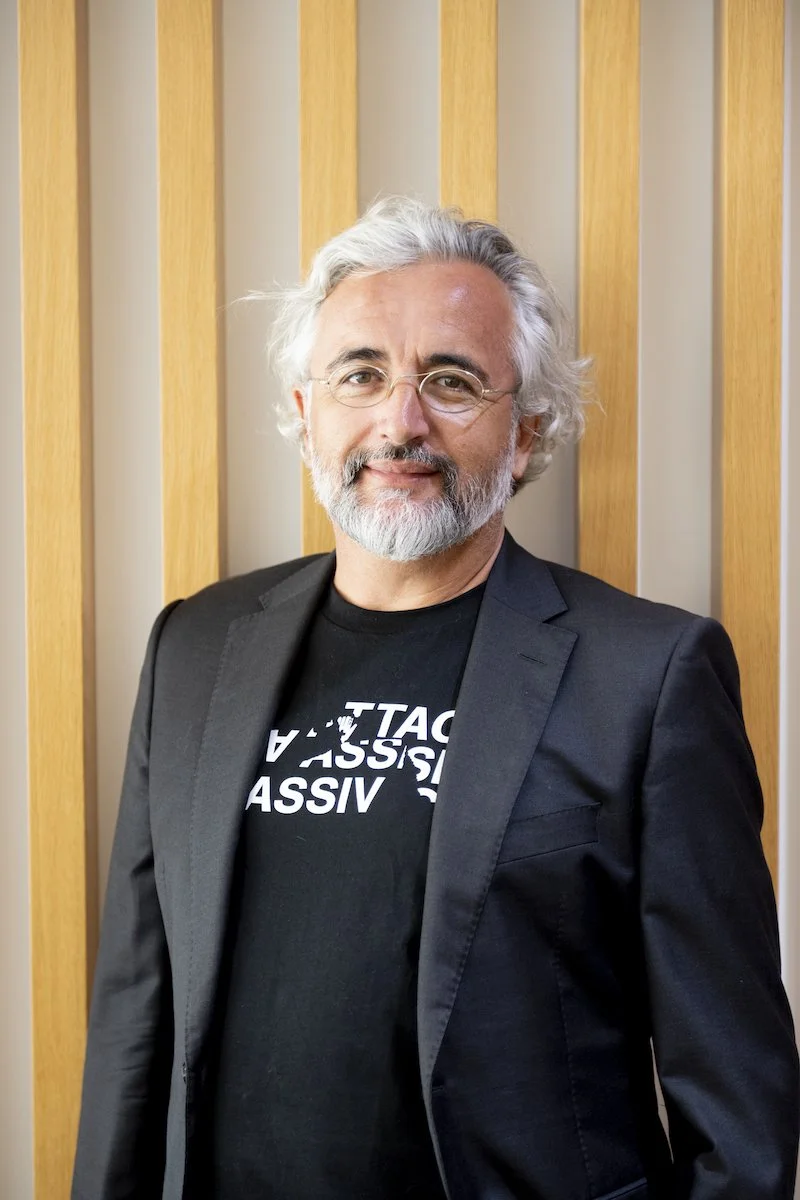
Paulo Amado
Founder of Congresso de Cozinha
For more than two decades, Paulo Amado has had front-row seats to one of the most transformative periods in Portuguese gastronomy and, in very different ways, has helped shape it.
Paulo, founder of Edições do Gosto, created Congresso de Cozinha in 2005 as a space for a new generation of Portuguese culinary professionals to meet, exchange knowledge, and give greater recognition to their craft.
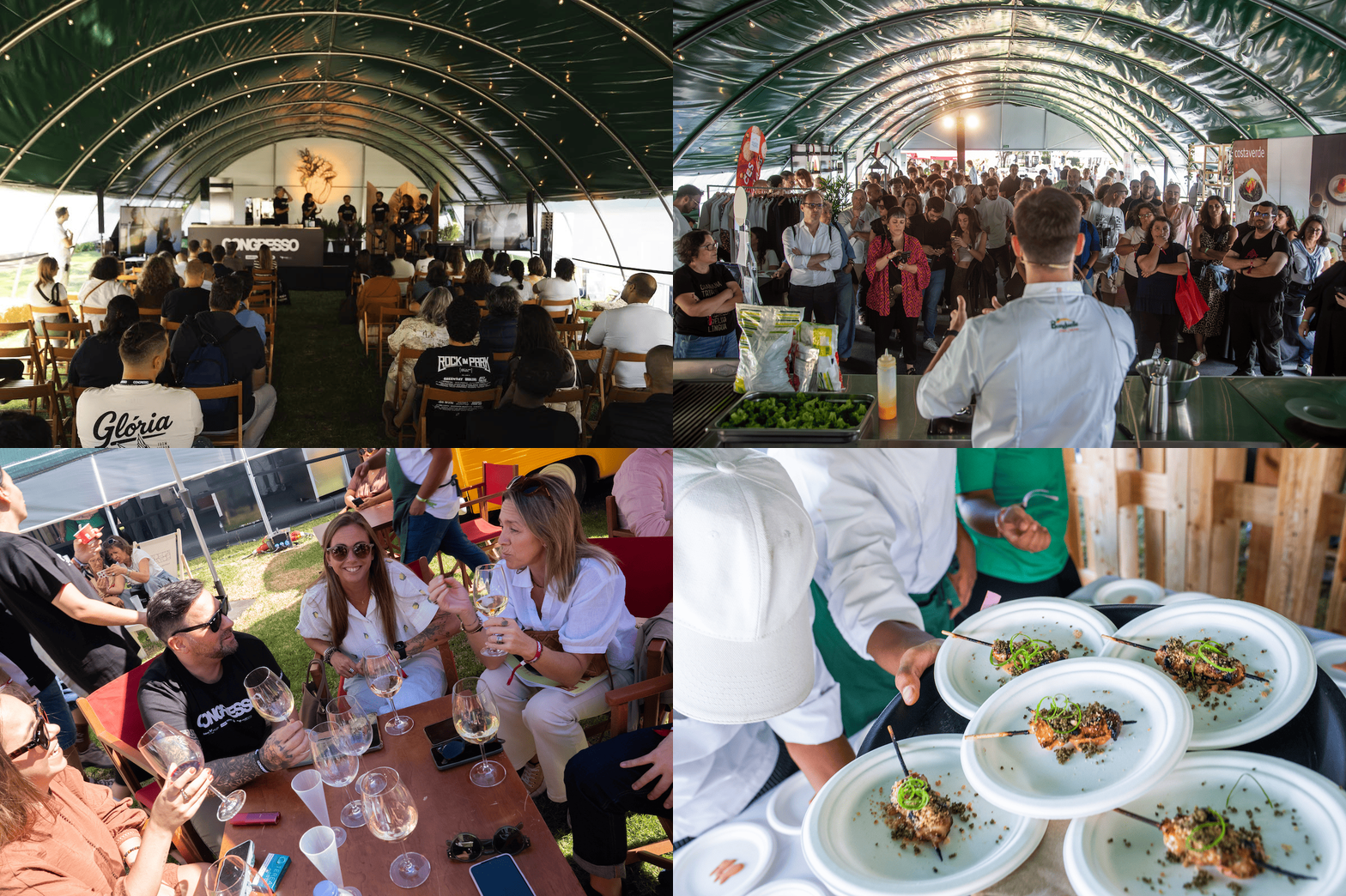
Over the years, the Congresso has evolved alongside the industry itself, broadening the conversation beyond what happens on the plate to questions of sustainability, culture, working conditions, equality, mental health, and the future of the profession. This year's edition takes place this Sunday and Monday (September 27 and 28) at Jardins do Palácio Marquês de Pombal, Oeiras.
◆ When Congresso de Cozinha began in 2005, what conversation did you feel the Portuguese food industry desperately needed to have?
There needed to be a platform for sharing. That may not be visible today to those who weren’t part of that time. There was a real sense of energy and excitement that kept renewing itself, and Congresso de Cozinha remained the great stage for the industry, a place where professionals can make their first appearance, and a place for growth through discussion and sharing.
◆ If you had to describe Congresso de Cozinha in just three words, what would they be?
A space where a kitchen grows: humanism, knowledge, health.
◆ You've watched Portuguese gastronomy transform enormously over the past two decades. What has changed for the better and what still hasn't changed enough?
It has been a long journey, and my opinion is influenced by the last few years. After a peak of national and international recognition – a declaration of love for Portuguese cuisine – the number of tourists continued to grow. The supply increased dramatically. There were suddenly many more restaurants. The profile of the tourist also changed. Restaurant occupancy declined. And we are living with this duality.
Those with many customers are also struggling. There is a lack of knowledge and direct action to help structure the sector. There is a lack of training overall, and a lack of clarity about the value of the sector so that appropriate action can follow.
◆ Gender equality is one of the causes that Congresso has been advocating for, going back to a time when these conversations were much less present in the industry – and chef Marlene Vieira has been an integral part of that. Looking back, how much has really changed for women working in Portuguese kitchens?
Marlene Vieira told me, more than once, that there weren’t enough women taking the stage at the Congresso. I’m grateful to her for that. At the time, I wasn’t really aware of the issue. The pressures we faced, with the ups and downs of the economy, made it seem that, for a company like ours, survival and simply moving forward had to come first. Until, eventually, this and other issues found their rightful place. And after all these years, we strive to foster different kinds of balance – social, technical, but above all, human.
What I mean is that Congresso, and everything we do, should be a place for everyone: a place that promotes knowledge, gender balance, diversity, inclusion across generations, sustainability, the well-being of the community, and relationships with artists, among many other things. Ensuring the company’s survival through the ups and downs of the economy is one of the central themes for us today.
◆ Over the years, Congresso has expanded itself beyond cooking to address sustainability, mental health, equality, working conditions, culture, and other issues affecting the profession. Was this evolution intentional, or did the Congresso simply evolve because the industry itself demanded a broader conversation?
This evolution is conscious. We want a fairer and more balanced society, where the value of each individual life is recognised. Gastronomy, Congresso's different stages, and the choices and programming we make can play a very important role in this.
◆ This year's central theme is the Sea. Portugal's relationship with the ocean is deeply embedded in its identity and cuisine, but its resources are not infinite. What conversations do you hope this year's edition provokes about the way chefs source, cook, and think about the sea?
The sea is essential to the balance of the planet. It reflects and influences it. We are talking about the health of the planet. We are also interested in human health. Once again, we are talking about awareness and knowledge of the extraordinary event that is happening here and now. Last year’s theme was “One Health”, referring to the whole. We need to refine our understanding of the value of every part, and the sea is an enormously important part of that whole.
It is not enough simply to choose a “good” fish. The sustainability of our oceans is at stake, and we need to understand what that means and what role each chef’s choices can play.
◆ After more than two decades of bringing different generations of chefs and hospitality professionals together, what do you think today's younger generation expects from this profession that your generation didn't?
Everything changes. I’m happy to observe the constant change between generations. The changes still don’t shock me. I suppose that means I’m in tune with them, I believe.
I like that. This generation expects and demands things. Naturally, they have a different sensitivity. A different awareness. A new vision. It has always been this way. They expect safe and inspiring working environments. It isn’t easy, but it isn’t impossible either.
◆ Our readers love discovering Lisbon through the eyes of true Insiders. Which five restaurants in Lisbon do you think are helping shape the future of Portuguese gastronomy today?
I can’t narrow it down to just five. There are popular restaurants, casual, fine-casual, and fine-dining establishments.
◆Finally, imagine we're having this conversation again twenty years from now. What would you hope has fundamentally changed about Portuguese gastronomy, and what would you hope has never changed?
In twenty years, I want to be able to say: “Ahhh, those tourists we wanted so much did come and, through great effort, we managed to maintain our identity, in a way that makes Lisbon worth discovering. A city that came close to losing its identity, but managed to recover it.”