
- Insiders Profile -
Michèle Fajtmann
Founder of the Lisbon Design Week
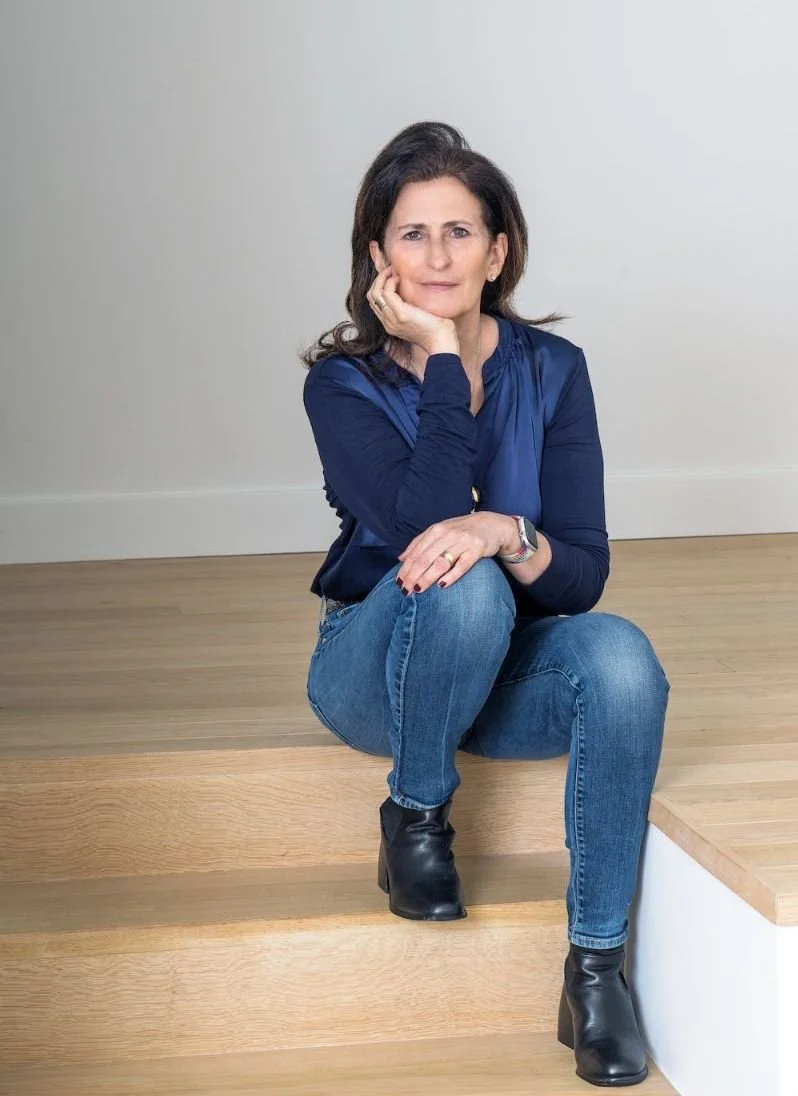
As founder of Lisbon Design Week, Michèle Fajtmann has created a city-wide platform bringing together galleries, studios, makers, artisans, brands, architects, and designers through a decentralized program celebrating contemporary creativity across Lisbon.
Unlike a traditional fair format, Lisbon Design Week transforms the entire city into a creative landscape — encouraging visitors to discover Lisbon through exhibitions, open studios, collectible design, craftsmanship, installations, and collaborations spread across different neighborhoods and creative communities.
At a moment where Lisbon is increasingly positioning itself on the international design map, we spoke with Michele about the evolution of Lisbon Design Week, the importance of building creative ecosystems, and why Lisbon has become such a fertile ground for design and contemporary culture. community around unique objects, limited pieces, artisanal savoir-faire, and contemporary aesthetics.
◆ What inspired you to create the Lisbon Design Week, and what was your original vision when launching the project?
What inspired me to create Lisbon Design Week was really a mix of curiosity, chance, and a long-standing fascination with cities and culture. Before moving to Lisbon, I had organised many cultural events in London through my company, From My City, always with the idea of bringing people together through creativity and public space. During the pandemic, while walking through Santos, I noticed stickers mentioning “Santos Design District” and became intrigued by this hidden design community I knew nothing about.
Through conversations with designers, makers, and some of the founders of that original initiative, I realised there was an incredible creative energy in Lisbon that deserved far more visibility and connection. My original vision was to create a citywide event where people could wander through Lisbon’s streets, ateliers, galleries, and studios, discovering not only design but also the neighbourhoods, the makers, and the human stories behind them.
◆ If you had to describe Lisbon Design Week in just three words, what would they be?
Craftsmanship, Collaboration, Discovery.
◆ Unlike a traditional design fair, Lisbon Design Week activates the entire city through studios, galleries, exhibitions, and creative spaces. Why was this format important to you?
From the beginning, I never wanted Lisbon Design Week to feel like a traditional fair disconnected from the city itself. By visiting studios, galleries, cultural institutions, workshops, and design showrooms across Lisbon, I realised that what was truly special was the ecosystem as a whole and the way creativity was already embedded in the life of the city.
I felt it deserved a real activation that would reveal this network and encourage people to move through different neighbourhoods, discovering places and people they might never otherwise encounter.
Cultural placemaking has always been a major interest of mine, and having lived in cities such as London and New York, I have seen how powerful creative communities can be in shaping a city’s identity and energy. I wanted Lisbon Design Week to create that same feeling: something meaningful both for residents and for visitors coming from abroad.
◆ Over the last few years, Lisbon has become increasingly visible internationally within the design world. What makes the city so exciting today for creatives, designers, and makers?
I think what makes Lisbon so exciting today is the meeting between a remarkable local creative scene and an international community of designers, architects, and makers who have fallen in love with the country’s light, landscapes, materials, and craftsmanship.
Many international creatives have chosen to settle here because Portugal still offers a strong connection to making and to artisanal knowledge that has disappeared in many other places. At the same time, there has always been an incredibly talented local community with unique skills, but perhaps without enough visibility or confidence internationally.
What is happening now is that collaborations are multiplying between designers, artisans, architects, artists, and makers, and this is creating a real sense of momentum. More than a trend, I feel that a genuine creative community is being built, and it continues to grow stronger every year.
◆ Lisbon Design Week brings together a very wide range of disciplines and profiles. How do you approach curation and building coherence across such a diverse program?
We try to remain very open and inclusive while also being highly attentive to the quality and coherence of the projects presented. Every year, we discuss the programme with our advisory board, which brings together professionals from design, architecture, academia, communication, and the creative industries, and these exchanges are extremely important in shaping the direction of the edition.
What creates coherence is not necessarily a single theme, but rather a shared sensibility around craftsmanship, material research, collaboration, and the relationship between design and culture. We are also very attentive to balancing different types of participants from independent makers and emerging designers to galleries, brands, cultural institutions, and architects while ensuring a strong connection with the city itself. In the end, the diversity is precisely what reflects the richness and evolving identity of the Portuguese creative scene today.
◆ How important is craftsmanship and artisanal savoir-faire within the identity of Lisbon Design Week?
Craftsmanship and artisanal savoir-faire are absolutely central to the identity of Lisbon Design Week. I truly believe that Portugal’s greatest strength lies in its extraordinary makers, workshops and ancestral know-how, which still remain deeply alive across the country. What is particularly exciting today is seeing how contemporary designers, both Portuguese and international, collaborate with artisans to create work that feels innovative while remaining deeply connected to materials, heritage, and the human hand.
There is a sensitivity, authenticity, and attention to detail in these processes that people increasingly value internationally. In many ways, this dialogue between craftsmanship and contemporary creation has become one of the defining characteristics of the Portuguese design scene today.
◆ Have you noticed a shift in the way people engage with collectable design and contemporary craftsmanship today?
Yes, I think there has definitely been a shift, although it remains a gradual process. I have particularly noticed a growing interest from an international audience that is increasingly curious about collectable design, craftsmanship, and the stories behind the objects. What changes people’s perception most is often the direct encounter with the makers themselves, visiting ateliers, understanding the techniques, the time involved, and the human dedication behind each piece.
I remember visiting the Louis Vuitton ateliers in France and suddenly understanding why certain handcrafted objects have such value when they can take months, sometimes a full year, to create by hand. Even if these works are not affordable for everyone, I think there is something important in recognising and valuing the extraordinary work of artisans, because it becomes part of a shared cultural pride and heritage. More generally, I also see a growing interest internationally in collectable design among people who traditionally collect contemporary art, with a strong attraction to the uniqueness and emotional presence of one-of-a-kind or limited-edition artisanal pieces.
◆ What are some designers, artists, galleries, brands, or creative people currently inspiring you the most?
That is a very difficult question because there are so many inspiring creatives, especially in Portugal, and I would rather avoid choosing among Portuguese designers just before the edition starts. Internationally, I have always admired the work of Edmund de Waal, the simplicity and precision of his ceramic pieces, but also the emotional power of his installations and his literary work. I was particularly moved by his project, Library of Exile at the British Library, which resonated with me deeply.
Last November, I was also fascinated by Es Devlin’s installation The Library of Us, shown in Miami during Art Basel, which I thought was one of the most remarkable outdoor installations I had seen in recent years. I am generally very inspired by creatives who embrace storytelling and identity in a strong and personal way, which is also why I continue to admire Yinka Ilori and his joyful, highly recognisable visual language and use of colour.
◆ As an Insider, what are some of your favourite places in Lisbon right now?
Right now, I would probably choose three places in my Santos neighbourhood. Omakase Ri is my favourite for special occasions. I also love Skizzo and can’t avoid going to doBeco for its authentic pain au chocolat (and coming from a Belgian, trust me, that is a serious compliment).
◆ Finally, what can people expect from the next edition of Lisbon Design Week, and what’s next for the future of the platform?
Visitors can expect a very eclectic programme bringing together craftsmanship, collectible design, new technologies, textiles and architecture, with a particularly strong emphasis this year on collaborations between designers, artisans, studios, brands, and cultural institutions. Among the highlights are our main exhibition, “Design Feito à Mão,” at Arquivo Aires Mateus, the strengthened partnership with MUDE – Museu do Design and the Young Design Generation exhibition, as well as the launch of a new Spotlight section dedicated to ten designers presented across the city. Visitors will also discover installations and exhibitions in unusual settings, including chapels, private apartments, and lived-in spaces that reflect our interest in design as something experienced rather than simply displayed. I am also particularly excited about the presence of two important collectives this year, notably Luso Collective and the new collective Sotaque, which brings together designers shaped by the cultures and histories of Portuguese-speaking countries.
Looking ahead, we already have very exciting plans for next year, which will mark the 5th anniversary of Lisbon Design Week and will hopefully become a very special celebratory edition with an exceptional main exhibition. Beyond the festival itself, we want to continue developing the platform throughout the year through screenings, talks, and conversations around design in partnership with MUDE, and hopefully also through exhibitions and interventions in Lisbon’s public space. Since the beginning, my ambition has never been only to organize an event, but also to contribute to the city’s cultural life and the design sector in a more lasting, visible, and meaningful way.