

- Insiders Profile -
Jo Moss
Founder of Vagabond Productions Co.
What happens when nightlife blends theatre, performance and a little bit of the unexpected?
Jo Moss is the creative mind behind Vagabond, a Lisbon-born project bringing together immersive performances, music and unconventional experiences. This November, Vagabond returns with The FEAST, an immersive evening inside a hidden Lisbon palácio, where dining, performance and nightlife collide.
We caught up with Jo to explore his creative universe, the inspiration behind The FEAST and his perspective on Lisbon's evolving artistic and nightlife scene.
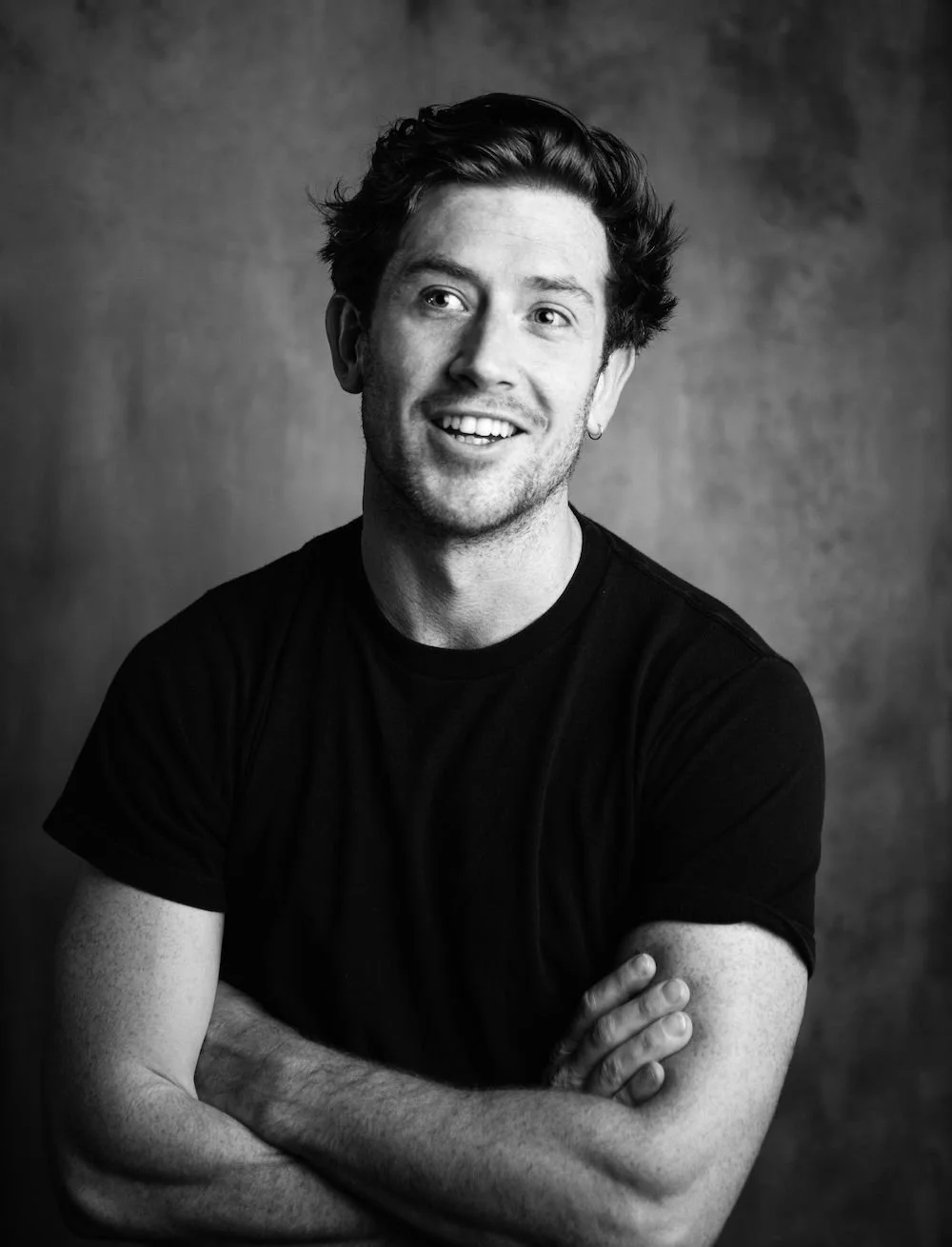
◆ For those who don't know you yet, can you tell us a little about yourself and the journey behind Vagabond?
I've spent much of my life immersed in theatre, circus and the more eccentric corners of nightlife. Getting my BA in the renowned circus school ESAC in Brussels and my Masters at the Royal Academy of Dramatic Art (RADA) in London set me in good stead. My career as an actor and circus artist has taken me around the world, working with extraordinary directors including the celebrated Cirque du Soleil director Franco Dragone, and the legendary theatre director Robert Wilson. Alongside that, I've spent 13 years involved with The Box in Soho, an experience that has shaped my understanding of what nightlife can be when performance, atmosphere and a little mischief collide.
These worlds have given me a rather unusual creative education, one that moves through theatre, spectacle, underground culture and luxury hospitality.
What began as a series of immersive nightlife events in Lisbon evolved into something bigger. After our first two events, we started attracting interest from private clients, and over the past two years I've been designing and producing ambitious, high-end immersive experiences around the world, from New York and Paris to Tuscany and Turkey.
The latest chapter of Vagabond brings all of these experiences together. It's an attempt to marry the creative freedom and unpredictability of alternative culture with the sophistication of luxury hospitality, creating experiences where food, performance, fashion and nightlife become part of the same world.
◆ With a background in theatre, circus and live performance, what inspired you to create Vagabond?
Vagabond was born out of something I felt was missing from nightlife, not just in Lisbon, but across Europe. I've always loved culturally rich, diverse environments, but I found that so much of nightlife had become rather one-dimensional: a DJ in a room with some lights.
Growing up in the UK, I spent my teenage years going to festivals like Glastonbury and Shambala, and later discovered places like Fusion and Waking Life in Europe. These are incredibly vibrant, magical environments where music, art, performance, and human connection all coexist. I couldn't understand why we weren't experiencing more of that spirit in nightlife.
Vagabond was my answer: an attempt to create a more immersive, multidisciplinary nightlife experience, where the unexpected could happen at any moment. I wanted to take that sense of discovery, freedom, and playful unpredictability that you find at the best festivals and bring it into a more intimate, curated environment.
◆ If you had to describe the Vagabond universe in just three words, what would they be?
Daring. Decadent. Unexpected.
◆ Vagabond blurs the lines between nightlife, theatre and performance. What makes an experience truly unforgettable for you?
I'm fascinated by the senses and how they shape our experience of the world. I think something becomes truly unforgettable when your senses are continually surprised, seduced and awakened. The music you hear, the flavours you taste, the scent of a room, the way the light falls, an unexpected performance right in front of you. All these elements can be orchestrated to take people on a journey without them even realising they're being led.
I love creating little corners of magic. Things you stumble upon rather than have presented to you. A hidden room, a peculiar character, an intimate performance that feels as though it was created just for you. Those moments when you turn a corner and suddenly find yourself in a completely different world.
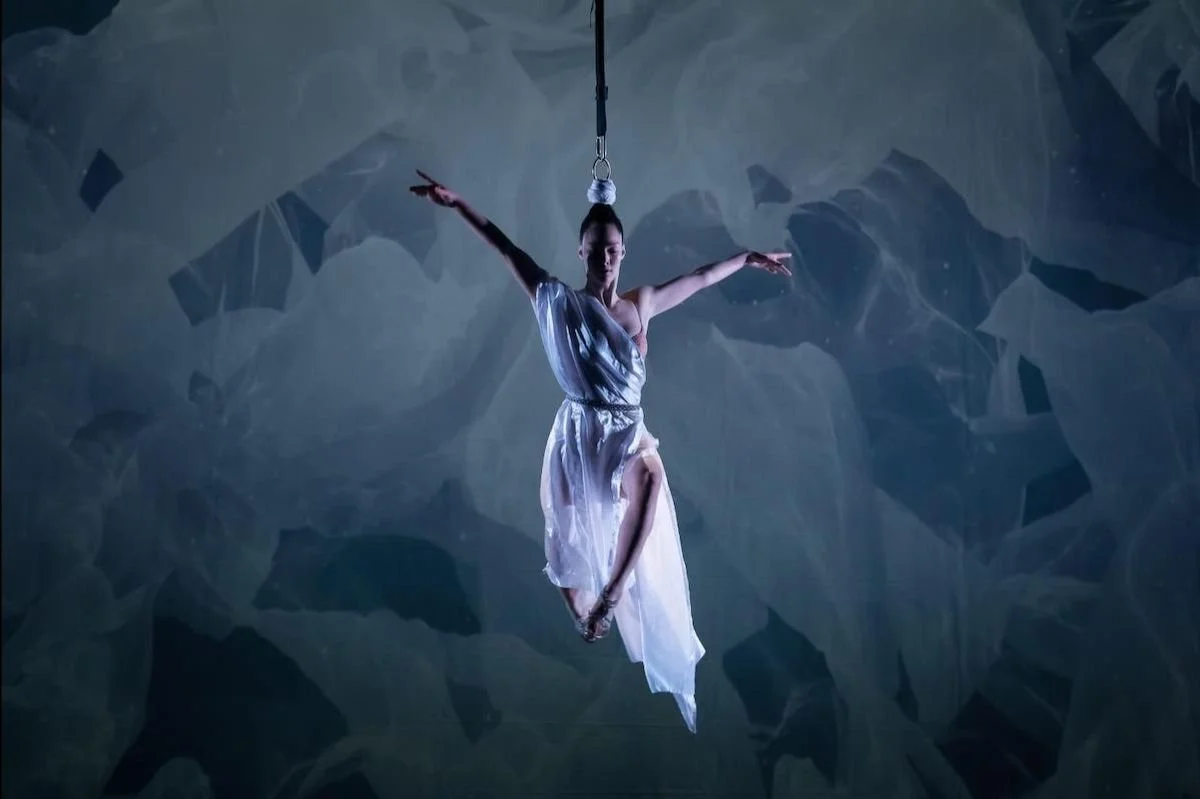
Palácio da Trindade
◆ Tell us about The FEAST. What's the concept behind it, and what can guests expect?
The FEAST is a journey of the senses, a feast for the senses, if you will. We're taking over a beautiful private palácio in the heart of Lisbon and filling it with extraordinary food, performance, music and a healthy dose of mischief.
At the centre of the evening is a three-course dinner created by a brilliant chef we're bringing over from London, who's worked in several Michelin-starred kitchens. We’re really excited that Howard’s Folly wines will be supporting the dinner too. But the dinner is really just one part of the adventure.
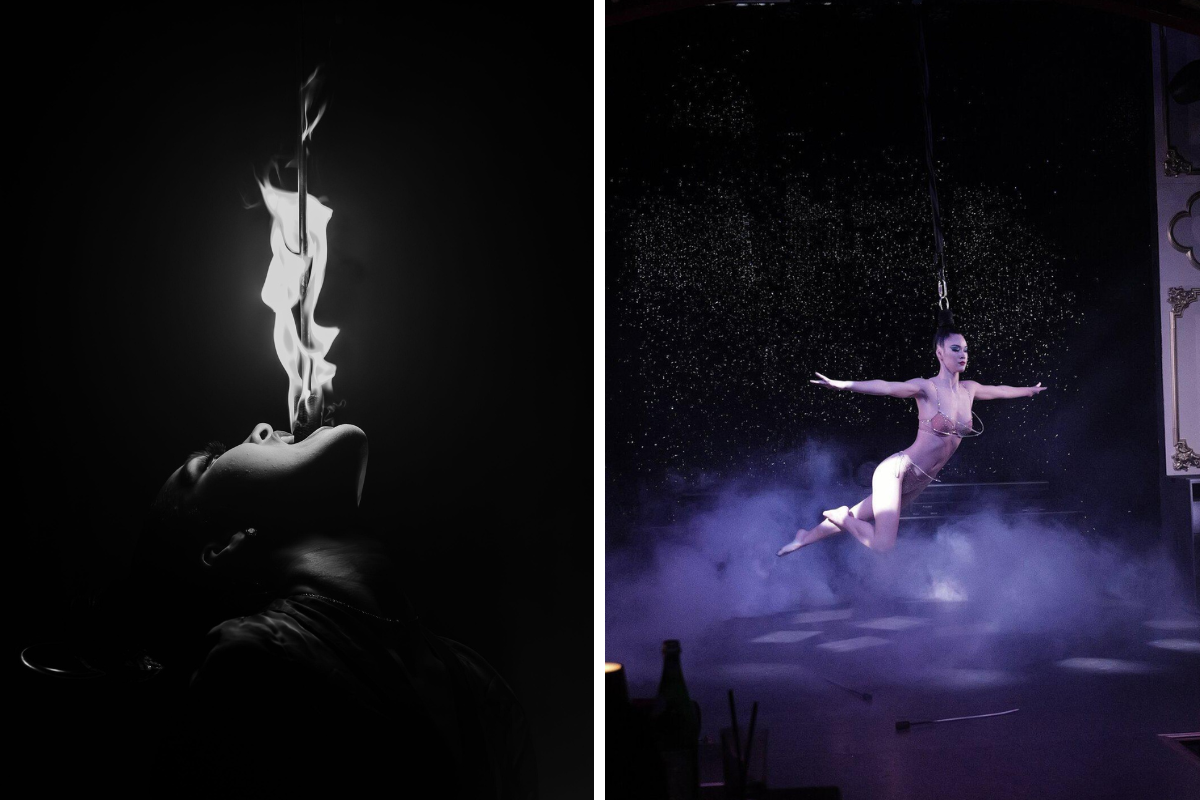
We've got over 20 artists bringing the palácio to life, some flying in especially for the occasion. The evening takes inspiration from the nine Greek Muses, and from the moment guests arrive, they'll encounter everything from a live string quartet to Cirque du Soleil aerialists, dancers, magicians and mentalists. During dinner, the table itself becomes our stage, with performances happening above, around and even on it.
Then, after dinner, we open up the rest of the palácio for a multi-room after-party. There'll be DJs, dancing, secret rooms, hidden encounters and quite a few things I'm deliberately keeping to myself.
I suppose the idea is to take all the things I love about a really good night out and put them under one roof. Wonderful food, extraordinary artists, beautiful people, a bit of decadence and plenty of opportunities to get into trouble.
◆ Audience participation plays an important role in your events. Why is it so central to your creative vision?
I think, fundamentally, as humans we crave connection. Not just with each other, but with the environments we find ourselves in. And I think there's something rather wonderful about entering a place where you're not quite sure what's expected of you, or what you might discover.
What's important to me is that participation never feels forced. I have no interest in dragging reluctant guests into the spotlight or making everyone perform. Quite the opposite. I want to give people the freedom to follow their own curiosity.
Some guests might throw themselves into every encounter, explore every room and become part of the madness. Others might prefer to sit back with a glass of wine and enjoy watching it all. Both are equally valid.
The pleasure for me is in creating an environment that encourages people to be a little more curious, a little more adventurous, and perhaps interact with people they might otherwise never have spoken to.
◆ What excites you most about Lisbon's artistic and creative scene today?
A friend once described Lisbon to me as a city in its adolescence, and I absolutely love that description. Of course, Lisbon has an incredibly rich cultural heritage and centuries of history, but in terms of its contemporary creative scene and nightlife, there's something wonderfully adolescent about it. The growth spurts, the experimentation, the occasional growing pains, and the feeling that there's still so much room for the city to find its feet and develop its own identity.
Unlike some of Europe's more established capitals, Lisbon still feels like a place where there's room to experiment, to create something new and genuinely make an impact. There's an incredible amount of creative energy here, and I think we're only beginning to see what the city is capable of.
That being said, adolescence comes with its frustrations. The bureaucracy, restrictive legislation and difficulties surrounding permits and licensing are creating real obstacles for nightlife venues and cultural spaces. It's a shame because these are precisely the places that nurture a city's creative identity, and I worry that we're stunting that growth just as things are getting interesting.
I have enormous respect for the people fighting to change this. A special shout-out to the civic movement Direito a Noite, Marcello at Those Who Dance and Cintia at Studio 204, all of whom, amongst others, are working hard to challenge the existing restrictions and help push Lisbon's nightlife forward.
Despite these challenges, I'm incredibly optimistic. Lisbon has a rare opportunity to develop a contemporary nightlife and cultural identity that draws on its extraordinary heritage while embracing new ideas, rather than simply replicating what already exists in London, Berlin or Paris. That's what makes it such an exciting place to be creating things right now.
◆ Lisbon's nightlife is constantly evolving. What do you think the city is still missing?
I think, in many ways, what Lisbon is missing is exactly what I'm trying to create with Vagabond. There's a real gap in the market for more sophisticated, immersive nightlife experiences that combine exceptional hospitality with artistic ambition and a healthy dose of eccentricity.
Lisbon is changing rapidly. There's a growing sense of style and sophistication in the city, and with it an appetite for experiences that offer something beyond the usual restaurant, bar or nightclub.
We have some fantastic underground parties and a thriving electronic music scene, but I think there's room for something a little more extravagant. Events where people can dress up, enjoy extraordinary food, encounter world-class performers and dance until the early hours, all in the same evening.
I don't think luxury has to mean conservative or predictable. Quite the opposite, actually. I'd love to see more experiences that are beautifully produced but also daring, playful, and a little outrageous. That's the space I want Vagabond to occupy.
◆ With so many events competing for attention, what do you think makes a creative experience stand out and leave a lasting impression?
That's a difficult question because it's so subjective. What makes an experience unforgettable for one person might leave another completely unmoved. It depends on your personality, your interests, the people you're with and even the mood you're in that evening.
But I think there's one fundamental principle: giving people the opportunity to create their own journey. And for that to happen, you need a map. I like to think of the event producer as a kind of cartographer, creating a landscape for guests to explore. And a good map needs varied terrain. Moments of excitement, intimacy, beauty, absurdity, and surprise. Different paths to follow, surprise encounters, and the occasional dead end that turns out to be the most interesting part of the evening.
The skill is in designing that landscape without dictating how people should navigate it. You create the possibilities, but leave the discoveries to them. After all, the best adventures are rarely the ones that go exactly according to plan.
◆ Finally, share a few of your favourite Lisbon addresses with us, whether for an inspiring performance, a memorable night out or a hidden gem.
I'm a huge fan of Portuguese cuisine, particularly the little neighbourhood tascas that haven't lost their character. Two of my local favourites are O Arêgos and O Lavrador, both of which I frequent regularly. There's always a wonderfully convivial atmosphere, the food is excellent, and there's absolutely no pretension. Good food, good wine and lively conversation. What more do you need?
For the arts, the Gulbenkian is a real treasure, although hardly a hidden one. I'm always surprised by how few people seem to take advantage of its cultural programme. There's an extraordinary variety of music, exhibitions and performances, often of an incredibly high standard. It's well worth getting to know what's on offer beyond the exhibitions that most people associate with it.
On a slightly more subversive and alternative level, I'm a big supporter of Laboratório beyond Marvila. They're one of the very few contemporary circus companies in Lisbon with their own dedicated space, and they're doing some genuinely exciting work, creating opportunities for artists and bringing a different kind of performance culture to the city.
I'd also give a special mention to Studio 204, who are developing some fascinating artistic concepts and experimenting with technology and AI in really imaginative, positive ways. I'm particularly interested in people who are finding new ways to bring different artistic disciplines together, and both of these spaces are doing exactly that.
For me, that's what makes Lisbon interesting. You can have a long lunch in a traditional tasca, spend the afternoon immersed in art, and finish the evening discovering something wonderfully strange in a space you never knew existed.
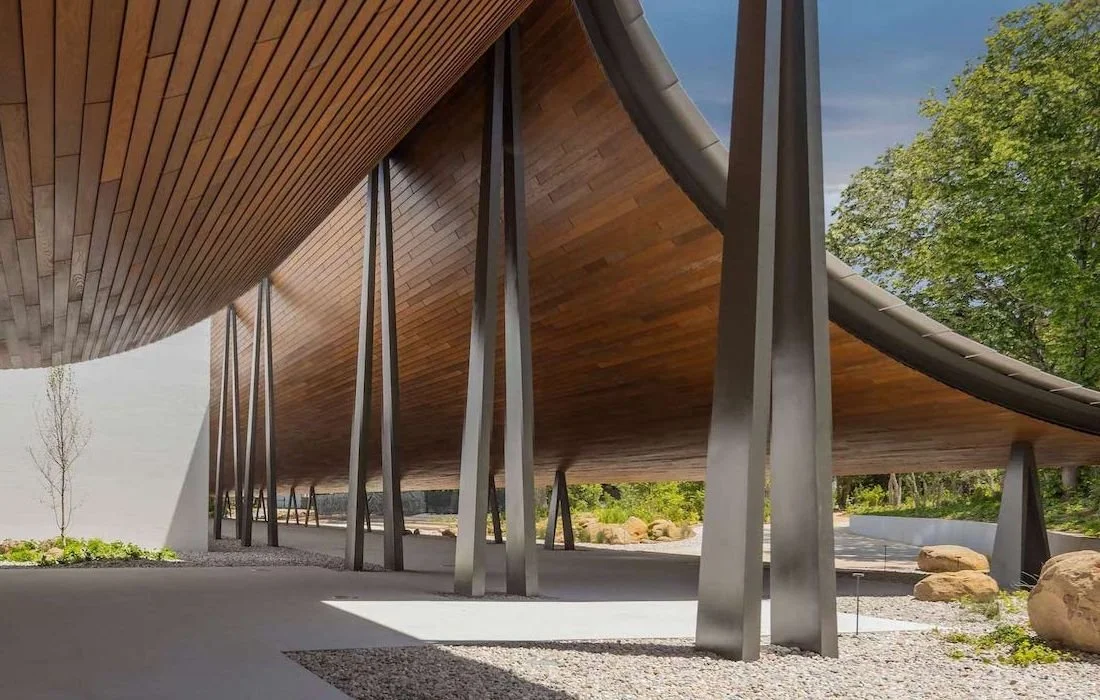
Gulbenkian
